Showing posts with label science. Show all posts

Tuesday, 19 April 2016

STEM investigation booklet freebie

Hi all,

As I mentioned in the last post, our school is having a STEM day as part of STEM Discovery Week (22nd to 29th April).

Here is the booklet I've made to go with our challenge (to build a base for a stilt house). You can download it for free by clicking here.


Saturday, 23 May 2015

Plant Life Cycles - free resources and ideas

In this post I have to give a big shout out to Sparklebox. Sparklebox has almost single-handedly saved me hours of planning and resource preparation time.

This week the children have been learning about life cycles of plants. This section of Sparklebox had more than enough resources to keep my children VERY BUSY this week. I just had to print, cut and laminate. Another great resource, was this cut and paste activity from Teachers' Pet . They have three differentiated versions but it's only available to premium members (£15 for a year's subscription).

Anyway, here are some pictures of what we got up to during the week:

We did an experiment to see how cress seeds would grow with or without water. It was very simple. All you need are cress seeds, cotton wool, two cups and felt tips to write on the cups. We used this Sparklebox cress booklet to document equipment used, predictions and daily growth (or lack thereof) in the two cups. At the end, there's also a section for a mini conclusion. 

The children LOVED this experiment to bits. They were so excited to watch how quickly their plants grow. They've all taken them home with the suggestion of making an egg and cress sandwich over the weekend!


I split the children into 4 groups and gave them pictures (from Sparklebox) of the parts of the life cycles of either a potato plant, an apple trea, a bean plant or a dandelion. They sequenced these together and then independently drew the life cycle and wrote what was happening at each stage into their language books. Then, as a group, they made a big poster of their plant's life cycle to share at assembly next week.

Then the children used these wonderful playdough mats (again from Sparklebox) that show 6 stages of the life cycle of a flowering plant. They worked with a group to create a playdough model of the seed/plant in each stage. Then they filmed the playdough mat as they read the description of each part. Finally, they used iMovie to put them all together into one video file.


Saturday, 16 May 2015

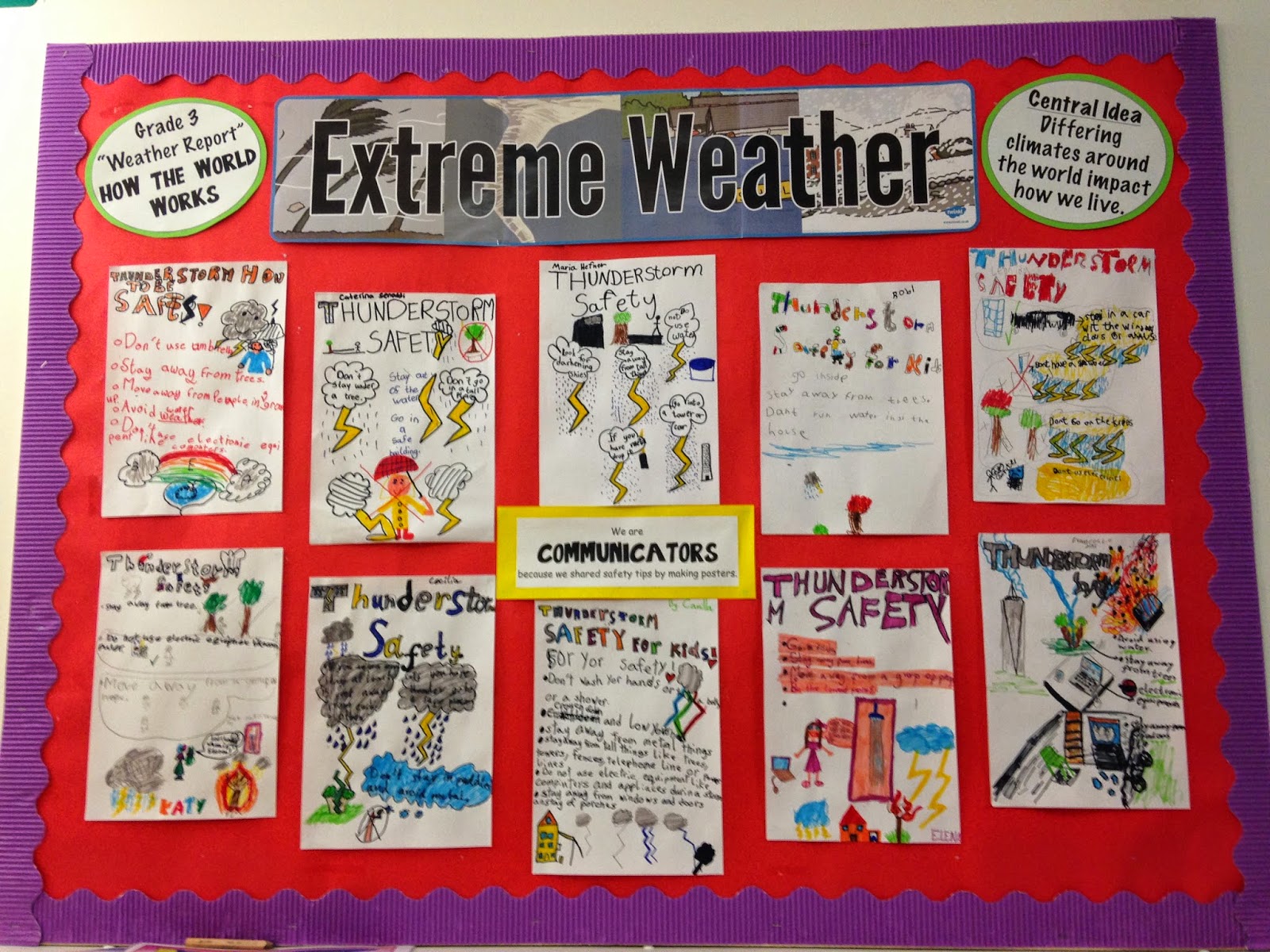
Our "How the World Works" unit of inquiry in pictures

My class has recently finished their fifth PYP unit of inquiry, under the transdisciplinary theme of "How The World Works." Our central idea was "Differing climates around the world impact how we live."

Here are a few pics of some things around the classroom by the end of the unit. Have a look back a few posts to find some more of the resources we used.


Tuesday, 16 September 2014

Free heart investigation sheet

Hi all,

Just a quickie for you tonight! Here's a freebie. It's an investigation sheet to use when examining the effect of exercise on the heart.

Click here or on the image below to download for FREE from my TPT store.

Enjoy!

Sunday, 23 September 2012

Heart and lungs resources - all free of course!

Last week, as part of the "Healthy Body, Healthy Mind" unit, my children were learning about the heart and lungs and how to keep them healthy. I found some nice resources for the interactive whiteboard and other activities related to the topic and thought I'd share them with you. I used these resources with children around 7-8 years of age.

THE CIRCULATORY SYSTEM:
Finding the heart using a stethoscope on the interactive whiteboard: This one is a great way of remembering the location of the heart. They move the stethoscope about until they can hear the heart beating. 

The children did an experiment to see the effect of exercise on their hearts. This involved sitting, standing, running/dancing and hopping. Of course they loved this! Click here or on the image below to download my heart investigation sheet.


After having experimented on themselves, they then had a go at changing Ruby's heart rate in this fantastic game from the BBC Schools website. It was a great assessment tool. I asked them to make Ruby's heart rate go up/down a little or a lot.

I found a huge selection of heart-related resources on the American Heart Association website. They have heart lesson plans divided up by subject and age level. Here, I came across this join the dots activity where the children follow the route of blood through the heart.


THE RESPIRATORY SYSTEM:
After this, we moved  on to learning about the lungs. Mr. Hardy's simple flash animation shows the movements in the respiratory system very clearly.  Having watched this, we then set out to make models of the lungs. I followed these instructions except we used plasticine instead of clay. 

At the end of the lesson, the children watched this video to summarise. Again, there is a simple animation with commentary (not in the clearest English though!). This provided more detail in a visual way.


The children also designed anti-smoking posters. I found it very difficult to find classroom resources relating to the dangers of smoking that would be suitable for children who are that young. Quite a lot of the posters, videos, etc. were very gruesome. I thought this was a nice little animation to show how smoking affects the teeth, lungs, heart and brain in a not-so-gruesome manner. One word of warning - the brain is a bit scary!


Wednesday, 12 September 2012

Healthy teeth and bones assessment sheet


Bone clipart source

My class is exploring a "healthy body, healthy mind" unit this side of the mid-term. Last week we covered teeth and this week we were looking at the skeleton. I'm going to do a quick assessment tomorrow to see how much they know about keeping their teeth and bones healthy.

Click here to view/download that assessment sheet.


Thursday, 6 September 2012

Skeleton lesson ideas

I apologise for my very inconsistent blogging patterns! I'm still very busy with a new job and country so it's hard to find time. Lots of things that I took for granted in Ireland (driving to work, knowing where to buy household things, speaking the same language, much less bureaucracy) make everything a little more time-consuming. That said, I'm delighted with the sunshine, the views of the ancient city, being in the city centre and listening to and seeing Italians everywhere!


Anyway, I just thought I'd share this link. My class will be looking at the skeleton this coming week and, when searching for the classic "Them Bones, Them Bones Need Calcium" advertisement, I found this series of lessons. They're really fun, creative and integrate lots of subjects.

I also found this cute video called "The Skeleton Dance" (AKA Dem Bones) and of course, all 90s children from Ireland and the UK will remember the strange wooden man dancing and singing, "Them Bones, Them Bones Need Calcium!"

Tuesday, 10 April 2012

Titanic Teaching Resources


As Sunday marks 100 years since the Titanic sank, next Monday is a perfect day for exploring all things Titanic-related in the classroom. Here's an idea of some of the Titanic-themed lessons that I'm planning:


History: KWL chart in project scrapbooks. Complete a 3 page project on the Titanic, aiming to answer the questions asked in the W column. Examine photographs and diary entries. Debate: Was the Titanic unsinkable? (last link from Anseo.net here)


Geography: Map the route of the Titanic. Explore icebergs. Examine the phrase "That's only the tip of the iceberg."


Science: Design paddle boats. I came across a nice construction lesson here.


Music: Listening and responding to "Nearer My God To Thee," a song that was reported to have been played on the ship as it sank. They will then compose a sound story to document the story of the Titanic --> setting off, the buzz on board, hitting the iceberg, sinking, the calm after all of the commotion.


Visual arts: Discussion on warm/cold colours. Paint a picture of the Titanic using mainly cold colours.


Drama: Define class - the differences between first, second and third class. Imagine that they are on the Titanic. One person is a third class passenger, the other is a first class passenger. They become friends but both sets of parents disapprove of the friendship. Hotseat the children and the parents. Generate potential solutions for this conflict.


In the children's individual computer time (in my classroom, all children have two short computer slots each week where they are assigned sites to check out weekly.)
Take a Virtual Dive to the Titanic: This section of the Discovery Channel site focuses on the technology used to explore the wreck of the Titanic. It's a very child-friendly, interactive way of exploring the Titanic. This would certainly appeal to the older classes in primary school.
(I found this on Scoilnet's Titanic page. There you'll find plenty of links for pupils and teachers alike.)
The Encyclopedia Titanica site is also useful for researching projects.


titanic lessons for kids, titanic classroom activities, titanic lesson ideas , titanic resources

Sunday, 25 March 2012

One to follow: Sciencebob.com

After a friend told me about a science lesson where the children made simple lava lamps (using justcooking oil, food colouring, water, and effervescent tablets in bottles), I went hunting for a video and came across this one from the Sciencebob website:

Delving further into the site, I found loads of child-friendly fun and simple experiments. Most are really visual and some are edible too. I particularly like this one where the children make diagrams of the moon phases using Oreos.


Two gooey and fun ones are making slime and making bouncy (rubber-like) balls. These both require Borax powder. It can be found in SOME supermarkets in the washing section but, if you can't find it there, it's often stocked in pharmacies.

Friday, 23 March 2012

The circle: Maths and science integration

This is just a quick post to share a lesson that worked nicely today. We were learning about vision (humans and animals) in science so we set about testing out peripheral vision. This active lesson tied in nicely with the topic of the circle that we've been doing in maths. 


We went out to the yard (outdoor lessons are usually popular!). The children were split into groups and each group was given a piece of chalk and some string. They were asked to draw a circle of a given radius. Then, one person stood in the middle of the circle, head and eyes facing forward while another member of their group walked along the line. When the person in the middle could no longer see the person on the line, they marked their initials on the circle. They did this on both sides and repeated for all members of the group.


It wasn't mind-blowing by any means, but it was a nice, hands on lesson so I thought it was worth sharing!

Thursday, 16 February 2012

Schools in the past

My class have been studying the history of schools in Ireland recently. If you are near Dublin, it may be worth bringing your class to the Small Lives photographic exhibition at the National Library's Photographic Archive in Temple Bar. It's running until June 2012. If not, you can view photographs from it on their Flickr site.

The NLI have provided some lesson ideas based on photographs of a classroom in Waterford. Click here to download them. 


I also stumbled upon the wonderful AskAboutIreland.ie which is very child-friendly. I set the children the task of researching the history of schools in the country using this site. They loved using it. It's bright, packed with information, activities, illustrations and pictures. 


Upon further delving into the site, I found some great resources for SESE and Gaeilge. I particularly like the eBooks of Irish myths and legends. There's an audio option for differentiation too. One reservation I have about the site is that the standard of Gaeilge is quite high and that it may be more suited to scoileanna T1 and only senior classes in scoileanna T2. 


Saturday, 4 February 2012

Animal Kingdom self-assessment freebie

The children in my class have been studying the classification of animals in the animal kingdom. They completed projects (a week of SESE homework) in scrapbooks. This week, some of the children made oral presentations based on their projects. I then gave out assessment sheets where the children filled in information based on one of the presentations they had been listening to. There was also a self-assessment (traffic lights system) piece at the end. I created two differentiated assessment sheets. 


To download these, click on the image above.

Wednesday, 30 November 2011

Free energy resources from SEAI

A friend recently pointed me in the direction of the Sustainable Energy Authority of Ireland website. They have a tonne of fantastic resources - books, worksheets, posters and lesson plans available - for free. They cover terms such as renewable energy, recycling, acid rain, etc. You can download a lot of these as PDFs here. There are some fantastic ideas for geography and science (and the ethical curriculum if you're in an Educate Together school) lessons including experiment sheets. This is definitely one to check out!

Wednesday, 14 September 2011

CSI-Themed Science Lesson

I found this lesson on the Discovery Education website and adapted it a little bit. I have previously used this lesson with 10-12 year olds and it went down a treat. It's great to see their surprise when carrying out the experiment, not knowing what reaction to expect as they mix substances!


Here is the original idea from Discovery Education and below are my adapted PowerPoint and the investigation sheets.


Materials needed:
plastic cups, vinegar, water, plastic spoons, labels, PowerPoint presentation (click on the image above to download), CSI video clip, investigation sheets, bags of cornflour, bags of baking soda, newspaper (the tables WILL get wet!), video about arson dogs (extension activity)
Each pair of children will need:

  • 4 cups {two with vinegar, two with water (labelled)}
  • 2 spoons
  • One small bag of cornflour (labelled "Substance 1")
  • One small bag of baking soda (labelled "Substance 2")
  • Newspaper
  • 2 investigation sheets


Click on the image above to view / download in Google Docs
Lesson:
1. Play a clip from CSI (make sure it's not too gory!). If you want to be really cheesy, ask the children to come up with cheesy Horatio-style one-liners or give them a pair of sunglasses to imitate his signature move. Lead a discussion on forensic science.
2. Present the children with the crime scenario on the PowerPoint.
3. Split the class into pairs and follow the organisational procedures as outlined on the PowerPoint for the distribution of materials.
4. Allow the children to carry out the experiment, step by step, as outlined on the PowerPoint.
5. Ensure that investigation sheets are filled in and tidy materials away.
6. Recap on the evidence (as per the PowerPoint) and ask the children to draw conclusions based on this and their investigation sheets. Ask for a show of "Thumbs up/ thumbs down" to show who they think is guilty.
EXTENSION ACTIVITY: If time permits, show a video about arson dogs (plenty of clips on YouTube) and discuss their work.


If you're Irish:
Subject: Science
Strand: Materials
Strand Unit: Materials and change
Integration: 
Oral language developed through discussion
Drama - based on crime-solving